PDF Reader-Swift Doc Converter
- 4.5
- Rating
- 10.00K
- Installs
- Free
- Price
 Analysis by App-foxy
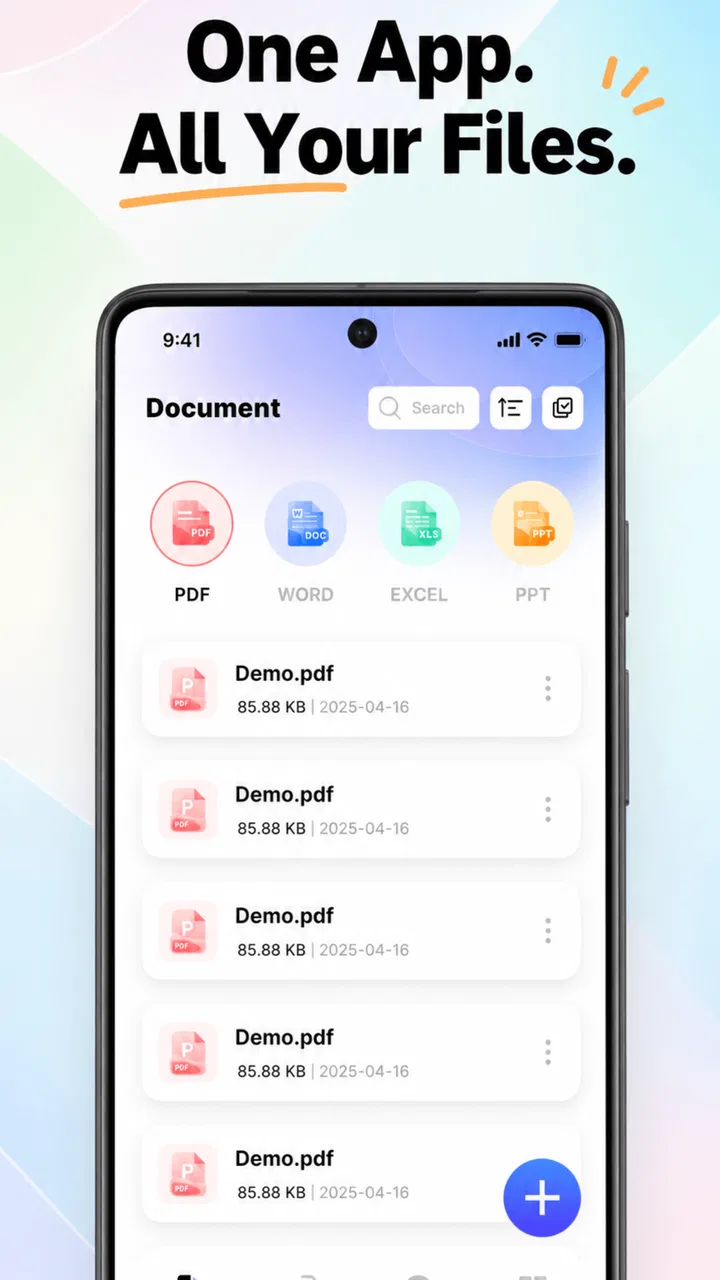
I approached PDF Reader-Swift Doc Converter as a practical productivity tool rather than just another document viewer. Its purpose is clear: help me read PDFs, make changes where supported, and convert documents from one format to another. That combination is useful because document work rarely stays in one step. I may open a file to check a clause, adjust something before sharing it, and then need a more convenient format for another device or application.
What makes this app worth considering is its focused identity. It comes from Olasmg Digital, is free to use, and is suitable for everyone. The current release is version 1.0.0 and works on Android 8.0 or later, so it is aimed at a broad range of phones and tablets rather than only recent hardware. Its average rating is 4.5 from around 180 ratings, while more than 10 thousand people have installed it. Those figures suggest an encouraging early reception, although I would still treat it as a relatively young tool and keep expectations sensible.
What I looked for when using it with everyday documents
When I use a document app for ordinary paperwork, I look beyond whether a file opens: I want to know how the steps fit together when I am in a hurry, handling a few files, or working on an older phone. I also pay attention to what happens when I need to pause and return, since a convenient workflow should make it easy to keep track of the right copy. That gives me a practical way to judge its speed expectations.
You May Also Like

 Blood Strike: 2.5 Anniversary
Blood Strike’s Loadouts Turn Every Drop Into a Tactical Gamble
A close look at Blood Strike’s custom loadouts: how fast access to signature weapons reshapes its battle royale rhythm, rewards preparation, and narrows the gap between fights.

 Pandora - Music & Podcasts
Pandora’s Music Is Easy to Start, but Harder to Recover
Pandora’s strength is its low-effort path from a seed to a station. Its weak spot is how much confidence it asks you to place in connection, setup, and quiet recovery.

 8 Ball Pool
 Is Built on Rivalries, Rematches, and Routine
A close look at the rivalries, rematches, shared routines, and unanswered safety questions that turn a quick pool match into a persistent mobile community.

 Samsung Music
’s Quiet Strength Is Playing What You Already Own
Its reach comes less from spectacle than from dependable access to a personal library. That simplicity is both the app’s strongest retention engine and its ceiling.

 AccuWeather: Weather Radar
AccuWeather Review: A Quick, Clear Forecast for Everyday Decisions
For everyday plans, the best forecast is the one you can understand quickly. AccuWeather makes rain timing, radar, and local conditions easy to act on, with a few trade-offs.

 Hill Climb Racing
Why Hill Climb Racing Still Turns Crashes Into One More Run
A tiny car, a bumpy hill and one more upgrade: Hill Climb Racing keeps resurfacing because its simple chaos makes every near-miss feel personal.
More From Our News Desk
View All News


A straightforward place to read PDFs
The most basic job is also the one I would use most often: opening a PDF and reading it without having to move between several unrelated apps. A dedicated reader is especially handy for receipts, handouts, application forms, manuals, and work documents that arrive through messaging or email. I like the idea of having one productivity app ready for that first inspection instead of opening a browser, a cloud service, and a separate editor just to understand what a file contains.
For me, a good reading workflow starts before editing. I want to check whether the file is complete, confirm that the pages display properly, and understand whether conversion is even necessary. Keeping those steps together is one of the stronger reasons to try this app. It reduces the small interruptions that often make document tasks feel more complicated than they should be.
There is also a useful distinction between reading a PDF and managing a PDF. A simple viewer may be quicker if I only need to open occasional files, while a document assistant becomes more valuable when I regularly switch between reading, modifying, and converting. This app is aimed at the second kind of user. I would not install it solely because I open one PDF every few months, but it makes more sense for someone who handles documents throughout the week.
Where editing and conversion fit into the workflow
The advertised combination of reading, editing, and converting is more useful when treated as a sequence rather than three isolated features. I would first read the original document, then make only the necessary changes, and finally convert a copy if another format is easier to continue working with. That order helps avoid a common mistake: altering the source before deciding whether the layout, text, or images need to be preserved exactly.
My practical tip is to keep the original file untouched whenever the document matters. Use a clearly named working copy, make the adjustment there, and compare the result with the source before sending it. This is particularly important for forms, invoices, school documents, and anything with tables. Conversion can change spacing or pagination in ways that are not obvious until the file is opened elsewhere, so a quick page-by-page check is worth the extra moment.
I would also use the app for small, targeted jobs rather than assuming it replaces a full desktop publishing suite. A document assistant can be convenient for a quick correction or format change, but complex layouts, long reports, and files with delicate typography deserve closer inspection. The app’s value is speed and concentration; it is not automatically the best environment for every professional document.
A realistic scenario: preparing a document before leaving home
Imagine receiving a PDF form while commuting. I might open it to read the instructions, make a necessary adjustment, and convert the document into a format that is easier to continue editing or share. With a single productivity app covering those stages, I can finish the task on a phone instead of waiting to reach a computer. That is the kind of small, everyday convenience that matters more to me than an impressive feature list.
Another useful situation is preparing a document for someone else. I could read a reference file, make a modest change, and create a version suitable for the recipient’s workflow. Before sharing it, I would check the page order, headings, images, and any fields that need to remain intact. The important lesson is that conversion should be treated as a review point, not merely a final button press.
Trust depends on visible choices, not assumptions
Because this app handles documents, I pay attention to trust differently than I would with a casual game. Files may contain names, addresses, signatures, financial details, or private correspondence. I therefore look for clear user choices around opening, editing, converting, and sharing. I also prefer workflows where I can decide which file to work on instead of granting broad access without understanding the consequence.
I do not treat a polished interface or a strong rating as proof of a particular privacy practice. The sensible approach is to read the permission prompts shown on the device, review the app’s visible settings, and avoid selecting sensitive documents until I understand what the app is asking me to allow. If Android presents a file picker, I would choose individual files or folders deliberately rather than giving wider access than the task requires.
My trust rule is simple: choose the narrowest access that lets the document task work. That habit is useful with any document tool, but it matters especially here because the app’s central purpose involves personal files. I would also avoid using it for highly confidential material until I had reviewed the app’s current privacy information and understood how its document handling works in practice.
Permissions, account controls, and data-sensitive moments
There are several moments when I would slow down. The first is the initial file-opening request. The second is any prompt involving storage, sharing, or another external service. The third is the point at which a document is converted, because the resulting file may be saved in a new location or shared through a different route. I would read each prompt instead of tapping through automatically.
I would also check whether an account is required for the particular task before importing anything sensitive. If the app lets me work locally without signing in, that would be my preference for ordinary documents. If an account or online step appears, I would want to understand what benefit it provides and what controls are visible before proceeding. I would not create an account simply to test a basic reader if the app allows a simpler path.
Android’s own controls are part of this review process. I can revisit permissions in system settings, remove access that is no longer needed, and check which application is being used when I open a document. Those controls do not replace careful reading of the app’s notices, but they give me a practical way to keep agency after installation. If a permission seems unrelated to reading or converting a chosen file, I would pause rather than assume it is necessary.
How I would protect the original and the finished copy
Document safety is not only about privacy. It is also about avoiding accidental loss or confusion. I would store the original separately, use descriptive filenames, and confirm which version I am sharing. A useful naming pattern is to include the document purpose and revision stage, such as “application-working” and “application-final,” rather than relying on a generic downloaded filename.
After editing or converting, I would open the output again in the same app and, when possible, in the application that will receive it. This catches practical problems such as missing pages, shifted content, or an output that is technically created but inconvenient to use. For a short document, this takes little time. For a long document, I would inspect the beginning, middle, and end at minimum, with extra attention to tables and signatures.
One less obvious trade-off is that convenience can encourage over-editing. When reading and editing live side by side, I may change wording simply because I can, even when the original should remain authoritative. I would use the editing function for clear corrections or preparation, not as a substitute for a proper approval process. That distinction matters in workplaces, classrooms, and shared household paperwork.
Who will get the most from this app
I see the strongest fit for people who frequently receive PDFs on a mobile device and occasionally need to do more than read them. Students checking course files, freelancers preparing client documents, families handling forms, and small-business users reviewing paperwork could all benefit from having reading and conversion in one place. The free price also makes it easy to test without committing money upfront.
It may be particularly useful if your current routine involves opening a PDF in one app, finding a separate converter, and then searching for an editor. Combining those steps can save time and reduce the chance of losing track of the right version. The app also suits users who prefer a focused document utility instead of a large office package with tools they may never touch.
I would be more cautious about recommending it as the only document solution for teams with strict approval procedures, advanced layout requirements, or specialized file compatibility needs. In those cases, a full office suite or a desktop editor may provide better control. Someone who only wants a fast, no-frills reader might also prefer a lighter viewer, since the extra editing and conversion focus may be unnecessary for occasional reading.
How it compares with familiar alternatives
Compared with a standard PDF viewer, this app’s appeal is breadth. A viewer is often excellent for opening and reading files, but it may require another tool when I need to alter or convert one. PDF Reader-Swift Doc Converter is more attractive when I want that broader workflow on the same device. The trade-off is that a broader tool can feel less minimal than a reader designed around one task.
Compared with a complete office suite, the app appears more focused on the PDF-centered part of document work. An office suite may be preferable when I need advanced spreadsheets, presentations, collaboration, or extensive formatting. This app makes more sense when the starting point is a PDF and the immediate goal is reading, editing, or conversion rather than managing an entire office ecosystem.
Cloud-based converters can be convenient for occasional format changes, but I am more careful with them because the workflow may involve uploading a document. For sensitive files, I would favor the option that gives me the clearest control over file selection and sharing. I would not assume that any app is automatically private; I would make the decision from the permissions, notices, and choices shown during actual use.
What I would check before relying on it
Before making this app part of my regular routine, I would test it with three harmless documents: a text-heavy PDF, a file containing a table, and a document with images. I would read each one, try the intended edit, convert a copy, and inspect the result. This small test reveals more than a store summary because it shows whether the workflow matches the kinds of files I personally handle.
I would also check how easy it is to locate the output, cancel an action, reopen a recent document, and share only the finished copy. These details determine whether a productivity tool actually saves time. If I have to search through several folders or cannot tell which version is current, the convenience of having multiple functions may disappear.
The early version number is another reason I would evaluate it gradually. Version 1.0.0 can be perfectly usable, but I would avoid making it the sole place for irreplaceable documents until I had built confidence through repeated tests. Keeping backups is sensible regardless of the app, and it is especially sensible when a tool is new to my workflow.
My cautious verdict for mobile document work
I find PDF Reader-Swift Doc Converter appealing because it targets a real annoyance: the need to move between a reader, an editor, and a converter for one document. Its free availability, broad age suitability, and support for Android 8.0 or later make it approachable, while the early rating of 4.5 gives it a positive starting point. Olasmg Digital has positioned it as a focused productivity app, and that focus is its main strength.
Still, I would recommend it with a careful workflow rather than blind confidence. Keep originals, inspect converted files, read every permission prompt, and review account or sharing choices before using private documents. Those habits are not obstacles; they are what let me use a document tool responsibly.
My recommendation is strongest for mobile users who regularly read PDFs and sometimes need to prepare them for another format. I would choose a fuller office solution for complex editing and a simpler viewer for occasional reading. If your needs sit between those two extremes, this app is worth trying because it brings the most common PDF tasks into one focused place without an upfront price.
FAQs for PDF Reader-Swift Doc Converter
01What is PDF Reader-Swift Doc Converter used for?
PDF Reader-Swift Doc Converter is designed to help users open, read, organize, and manage PDF documents on a mobile device. Depending on the available tools in the installed version, it may also support converting documents between PDF and other common formats, making it useful for reviewing files, sharing paperwork, and handling documents without needing a computer.
02Can PDF Reader-Swift Doc Converter convert documents into PDF or other formats?
The app is focused on document conversion, but the exact formats and conversion directions can vary by version, device, and subscription plan. Before relying on it for important work, check which file types are supported, whether conversion is available offline, and if advanced options such as batch processing or editable Word conversion require payment.
03Is PDF Reader-Swift Doc Converter free to download and use?
The application may be available to download at no initial cost, but some features can be restricted behind in-app purchases, subscriptions, advertising, or usage limits. Users should review the pricing page carefully before starting a trial, especially the renewal terms, trial duration, and cancellation procedure, since access to premium conversion or document-management tools may not be included in the free version.
04Does the app work offline, and can it access documents stored on my device?
Basic PDF reading is often possible without an internet connection once files are stored locally, although certain conversion, cloud, or processing features may require online access. The app may request permission to access device storage or files so you can import documents. Always review permissions and confirm that sensitive files are handled in a way that matches your privacy expectations.
05Is PDF Reader-Swift Doc Converter safe for confidential documents?
Users should be cautious when processing contracts, identification documents, financial records, or other private information. Read the app’s privacy policy to understand whether files are processed directly on the device or uploaded to external servers. Also check developer information, requested permissions, advertising practices, and deletion options before using the app for confidential or business-related documents.
Pros
- Opens PDFs quickly
- even when switching between several documents.
- Clear page rendering makes small text comfortable to read on mobile screens.
- Useful search tool helps locate words or phrases inside long documents.
- Supports document sharing through common messaging and cloud apps.
- Simple interface is easy to understand for first-time PDF users.
Cons
- Some advanced conversion options may require a premium upgrade.
- Large files can take longer to process on older phones.
- Formatting may shift when converting complex documents or tables.
- The app may request storage access to import and save files.
- Ad-supported screens can interrupt the workflow for free users.

PDF Reader-Swift Doc Converter
Gallery